

Stucco Supply for NYC Jobs That Stay Moving
- Stucco Direct
- 1 day ago
- 5 min read
A stalled exterior job usually does not stop because a crew cannot apply finish. It stops because the right mesh is missing, the trim package was short, the basecoat does not match the specified system, or the finish color was not confirmed before the scaffold went up. Reliable stucco supply is about keeping the entire wall assembly moving, not just picking up bags of material.
For contractors working across Brooklyn, New York City, Long Island, New Jersey, and Connecticut, material decisions need to hold up against real jobsite conditions: tight staging areas, occupied buildings, changing weather, inspection requirements, and schedules that leave little room for a second delivery. The best purchase is not always the lowest-priced item on a single line. It is the order that gives the crew compatible materials, enough coverage, and a clear path to finishing the work without avoidable downtime.
Build the Stucco Supply Order Around the System
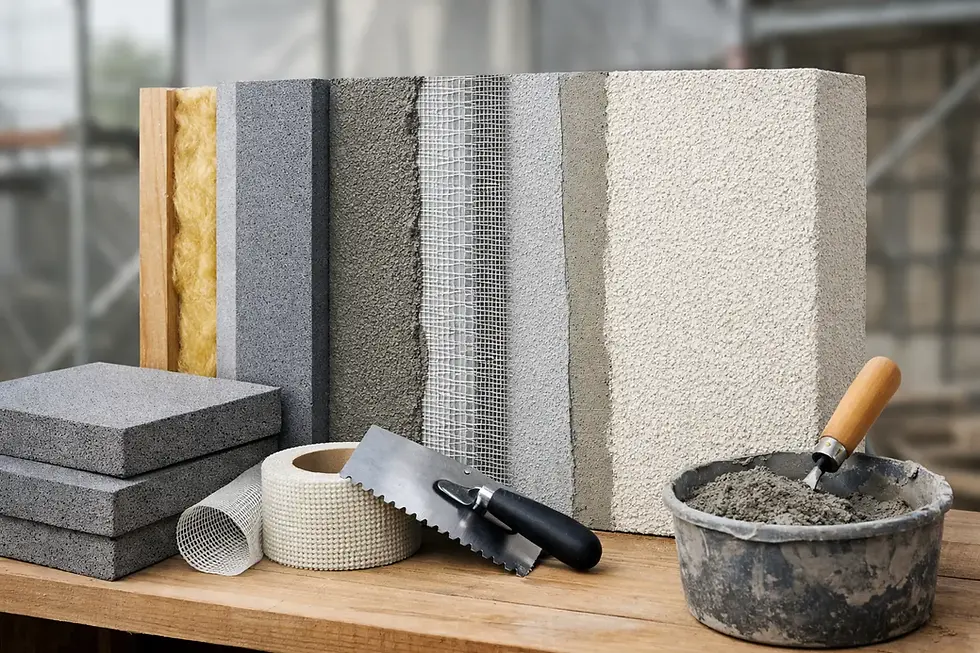
EIFS and stucco work are assemblies. That sounds basic, but it is where many repair calls and installation problems begin. A finish coat, basecoat, reinforcement mesh, insulation board, adhesive, fasteners, sealants, and trims all need to work together. Substituting one component without checking compatibility can create problems with adhesion, cracking resistance, warranty coverage, or finish appearance.
Start with the wall condition and the specified system. A new EIFS installation may require insulation board, adhesive or basecoat, mechanical fasteners, fiberglass mesh, accessories, primer, and acrylic finish. A traditional cement stucco wall may call for lath, scratch and brown coat materials, corner reinforcement, control joints, and a compatible finish. A small patch may only need repair material, mesh, primer, and finish, but that does not mean the product selection is simple.
Match the materials before ordering
Before placing an order, confirm the substrate, the system manufacturer, the finish texture, and the color. On a commercial job, the architectural specification should drive the selection. On a repair, the existing wall tells the story. Is the substrate masonry, sheathing, concrete, or existing stucco? Is there water damage behind the finished surface? Is the wall an EIFS assembly or cement stucco?
Do not assume that a material that worked on one project will work on the next. Basecoats, acrylic finishes, primers, and sealants are made for specific applications. A contractor who checks the assembly before buying avoids the expensive kind of quick fix.
What a Complete Stucco Supply Package Includes
A proper order should cover the work from substrate preparation through the final finish. For larger jobs, that usually means more than the materials named in the estimate.
Basecoat and reinforcement are the backbone of many EIFS and stucco repair applications. Fiberglass mesh comes in different weights for standard wall areas, high-impact zones, corners, and areas prone to abuse. A ground-floor storefront, school entrance, loading area, or busy multifamily building may need stronger reinforcement than an upper-level residential wall.
Trims and accessories deserve the same attention. Corner bead, drip edges, expansion joints, casing bead, weep screeds, reveal trims, and transition accessories control the lines of the wall and help manage movement and drainage. Leaving them off an order to save a few dollars can create a rough-looking finish or force a crew to improvise in the field.
The finish system is where appearance and durability come together. Acrylic color systems from manufacturers such as Parex and LaHabra give contractors and owners a wide range of colors and textures, but color matching should be handled carefully. Confirm the selected color, texture, and quantity before application starts. Different lots, weather conditions, substrate absorption, and application technique can affect the final appearance.
Tools matter too. Trowels, hawks, mixing paddles, rasps, foam floats, utility knives, hot knives, caulk guns, levels, and cutting tools are not afterthoughts when a crew is mobilizing. If the job is in a borough with limited parking and limited storage, one missed tool can cost more than the tool itself.
Estimate Coverage With Real Jobsite Conditions in Mind
Square footage is the starting point, not the final number. Openings, returns, parapets, window bands, columns, decorative details, and waste all affect material quantities. On an exterior renovation, the wall may reveal additional damage after demolition. On a new build, field changes can alter the trim count and insulation layout quickly.
Estimate basecoat, mesh, finish, and primer based on manufacturer coverage rates, then account for the wall profile and application method. Heavy textures use more finish than smooth textures. Uneven masonry can consume more basecoat than a clean, flat substrate. Extra corner reinforcement and overlap requirements add mesh. A low-rise residential job may have modest waste, while a complex commercial facade with many openings needs more allowance.
Ordering too close to the exact coverage number can leave a crew short at the worst time. Ordering excessive material without a plan can tie up budget and storage space. The right balance depends on job size, delivery access, product lead times, and whether matching material can be obtained quickly if conditions change.
Delivery Is Part of the Stucco Supply Decision
In New York City, delivery logistics can be as important as the product list. A Brooklyn brownstone renovation, a Queens multifamily repair, and a New Jersey commercial project each have different access issues. Street restrictions, loading windows, site security, elevator access, scaffold placement, and limited staging space all need to be considered before the truck arrives.
Give the supplier a clear delivery plan: jobsite address, contact name, best delivery window, unloading requirements, and whether material needs to be placed at curbside, in a designated yard, or near a hoist area. If the crew needs material for a specific phase, schedule that phase rather than filling the site with products that could be damaged, misplaced, or in the way.
Prime Stucco Supply supports contractors with specialized inventory and jobsite delivery coordination throughout the tristate area. For active exterior work, that local product knowledge can save time when a specification changes, a repair uncovers hidden issues, or a crew needs compatible material without waiting through a long reorder cycle.
Repairs Need More Investigation Than New Work
A stucco crack is not always a stucco problem. It may be movement at an opening, failed flashing, water entering at a roofline, poor drainage, impact damage, or a failing EIFS detail. Covering the crack with finish may improve the appearance temporarily, but it will not correct the cause.
For repair work, identify the extent of damage before ordering. Small surface cracking may need a localized repair and finish blend. Delamination, soft sheathing, moisture intrusion, or widespread cracking may require removal to a sound substrate, new reinforcement, and rebuilding the assembly. The material package should follow the repair scope, not just the visible defect.
Matching an existing finish can also be difficult. Texture, color age, sun exposure, and previous patching all influence the result. A good repair plan sets realistic expectations with the owner and tests the finish approach when appearance is critical.
Homeowners: Buy Materials With a Qualified Installer in Mind
Homeowners can purchase repair materials, but exterior wall work is rarely a simple cosmetic project. Improper flashing, missing drainage details, wrong mesh placement, or incompatible coatings can turn a small repair into a bigger expense. If the issue involves water, soft wall areas, large cracks, or an EIFS facade, bring in a qualified contractor before buying a cart full of products.
For Brooklyn-area owners who need installation support, a supplier with established contractor relationships can help point them toward screened, licensed professionals. That gives the owner a better starting point than hiring someone who only promises to patch and paint over the problem.
Keep the Crew Working, Not Waiting
The best stucco order is planned around the actual work sequence: prep, reinforcement, basecoat, cure time, primer, finish, and detail completion. Confirm the system, measure carefully, include trims and accessories, account for conditions on site, and schedule delivery around the crew's next move.
When a job is ready to start, bring the wall details, measurements, finish selection, and delivery requirements to the supply counter. A practical recommendation before the order is placed is far easier to manage than a missing component once the crew is standing on the scaffold.
Comments